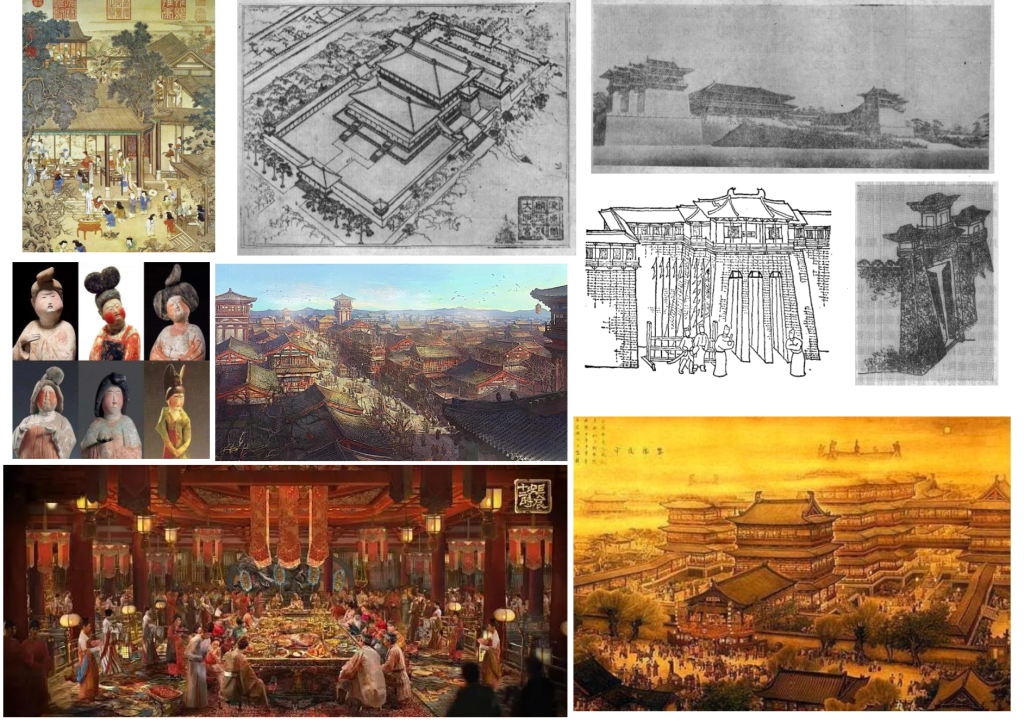
The Tang Dynasty was a free, open and inclusive time in ancient China, where people were full of vitality and the civilisation flourished.There were also many inventions that had profound impacts on history.I like this era very much, and I think this era was extremely suitable to produce more inventions. At the same time, I also like the beauty of ancient Chinese architecture, and I would like to present a technological product with Chinese classical architectural style with this era as the background.
Elevators have a great impact on people’s life.There were also many tall buildings in ancient China such as towers of various uses, some palaces, the Drum buildings of Dong nationality and so on.In many cases people have to go up very high stairs, so it would be convenient to have elevators.
At that time, operating the elevator would have required human labor at that time, so if there was an elevator, it was most likely to be in a place of great power, such as the royal palace.But at the same time, I have been thinking about how to maximize the liberation of human labour and create a safe automatic elevator with the existing conditions, so that the elevator can be more widely used.
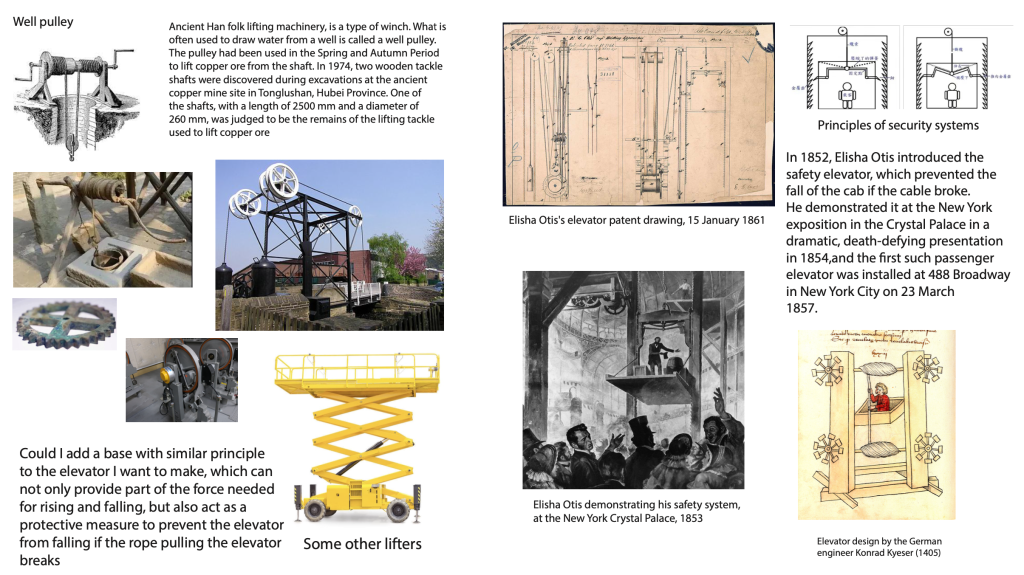
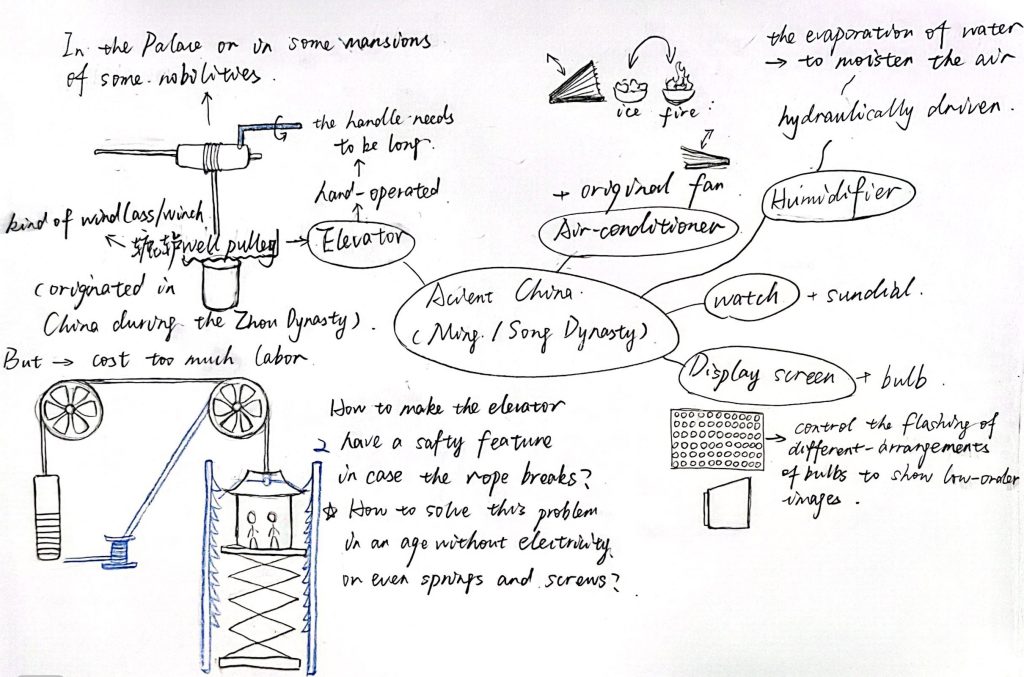
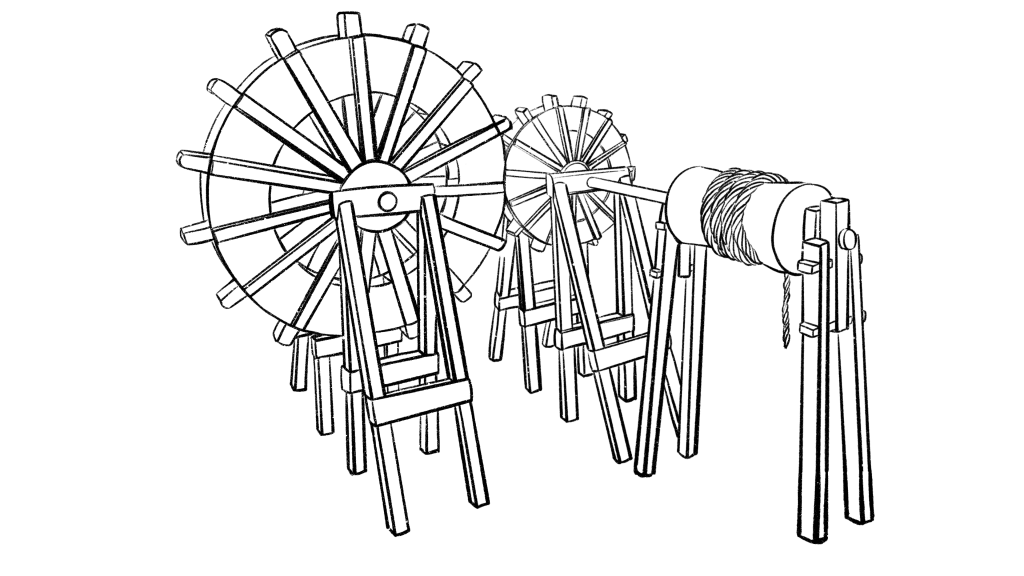
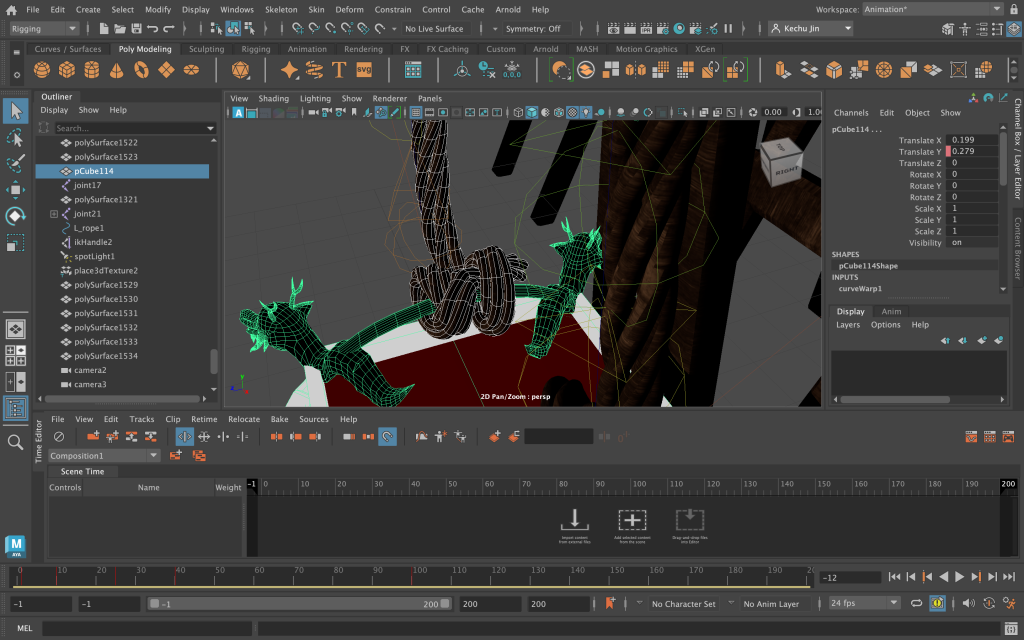
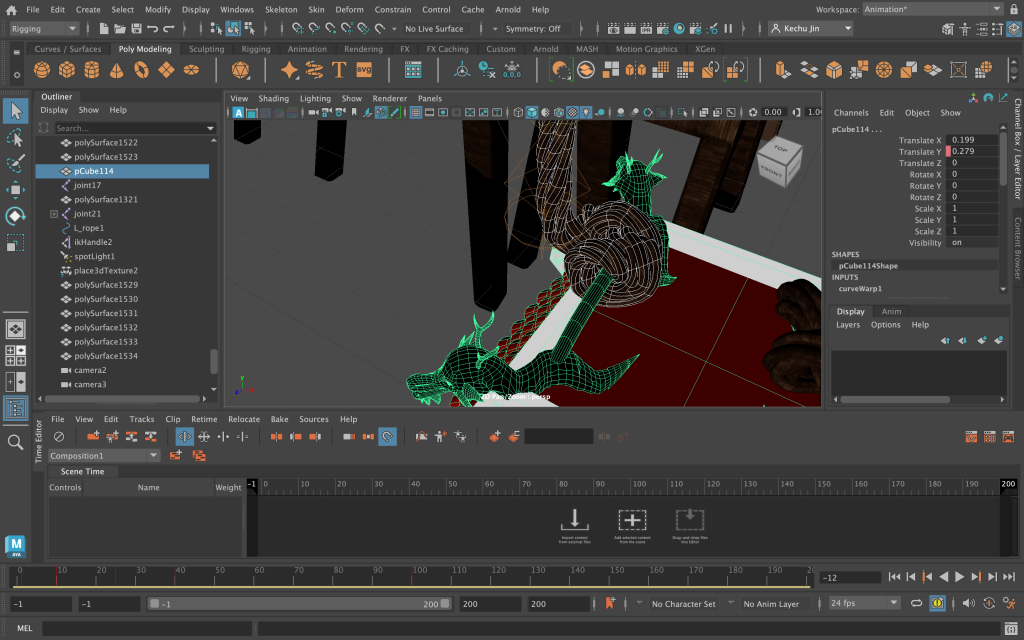
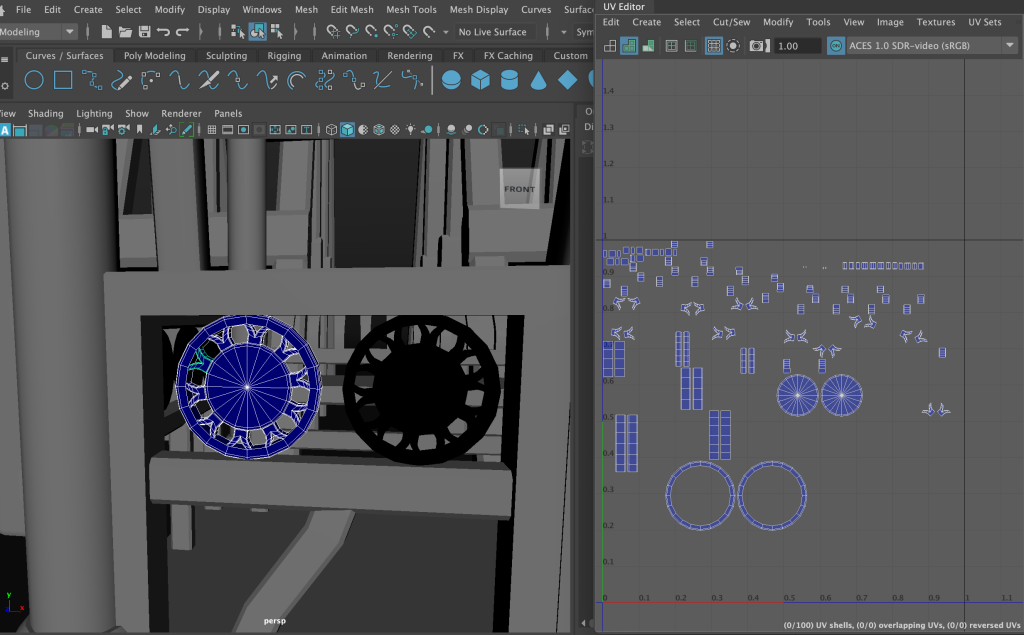
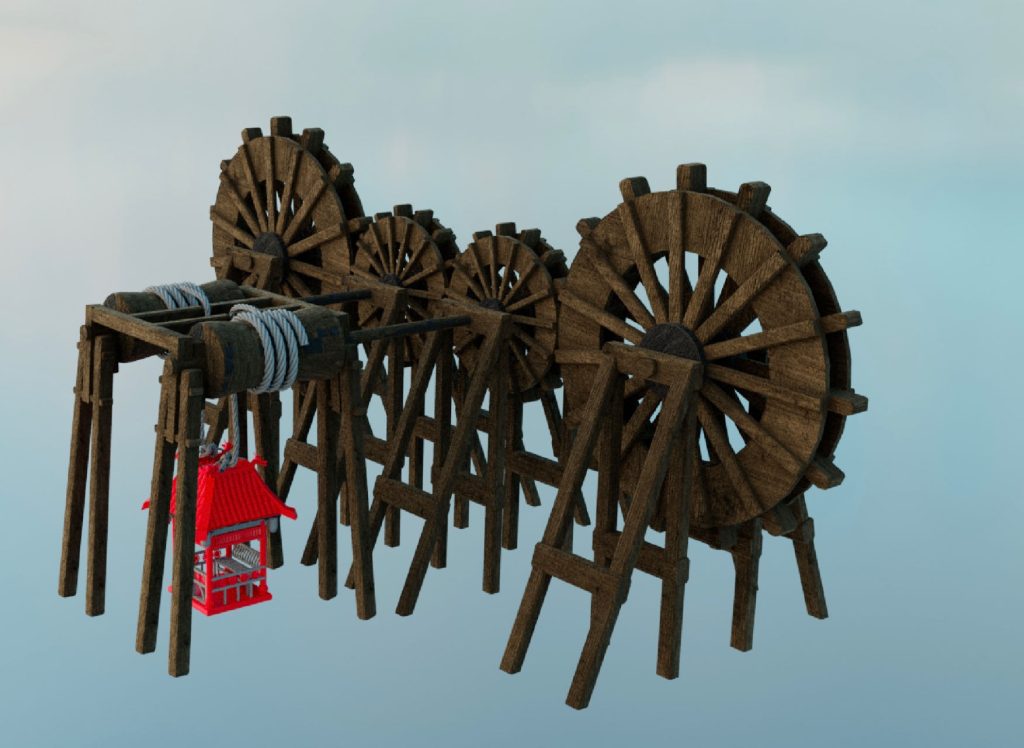
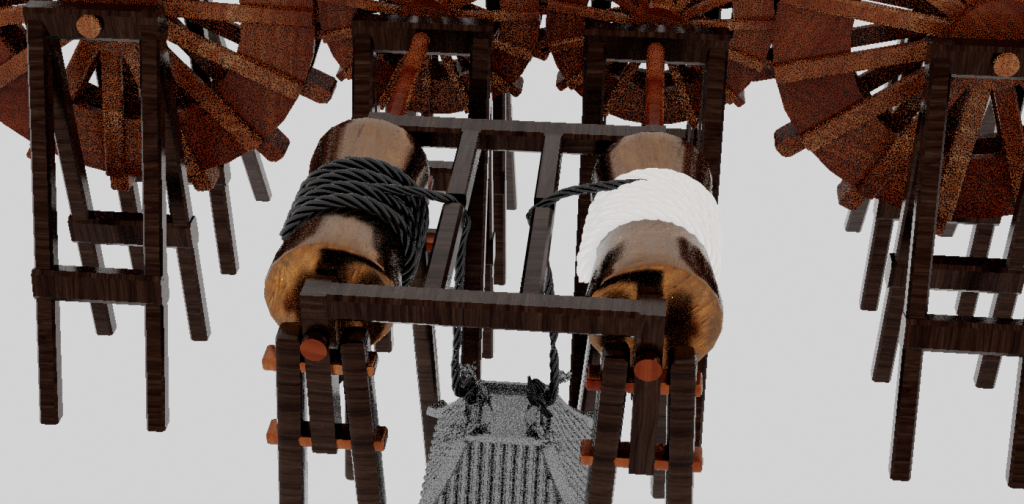
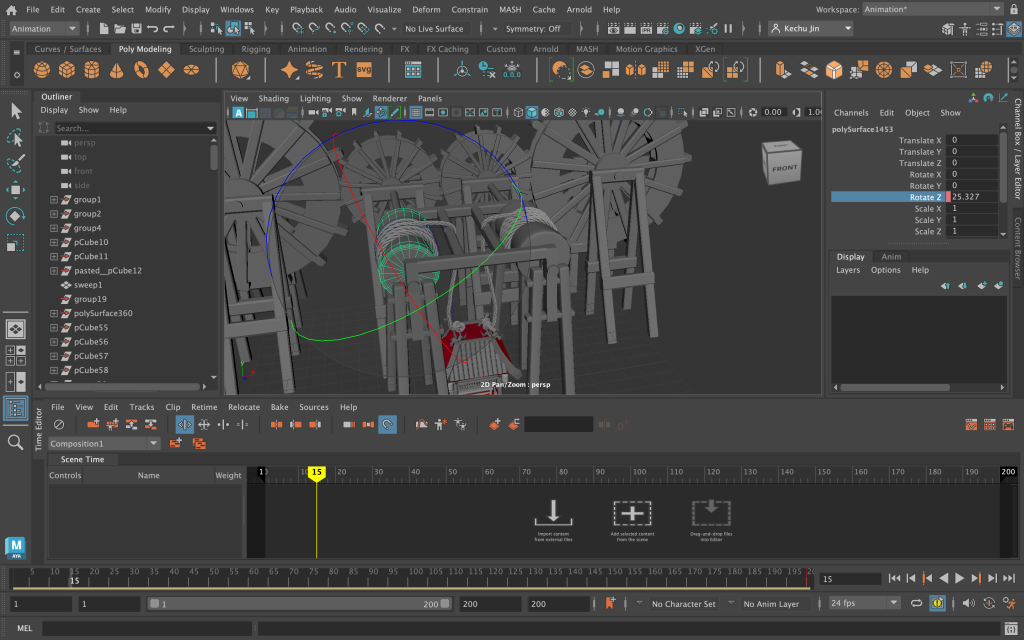
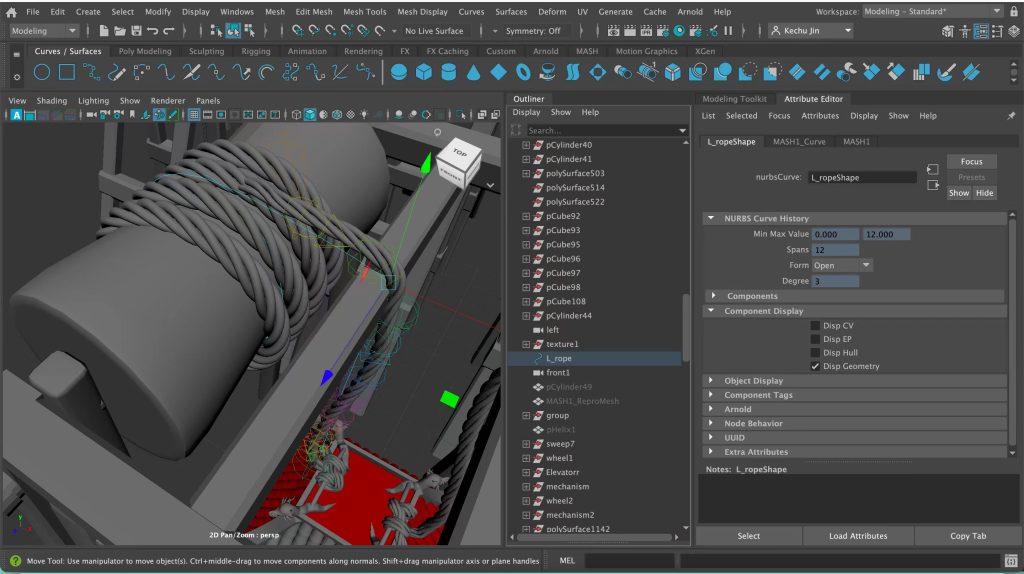
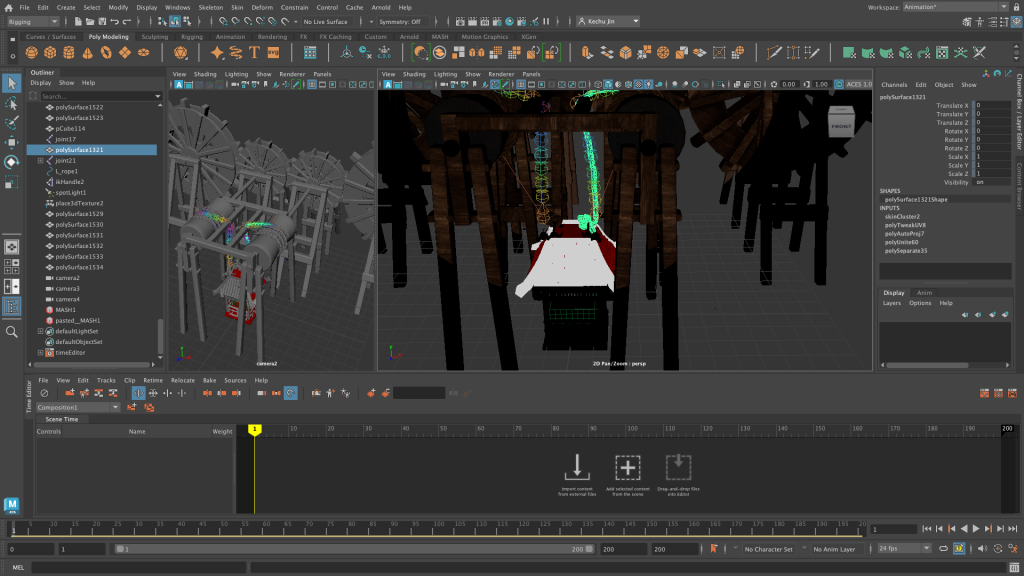
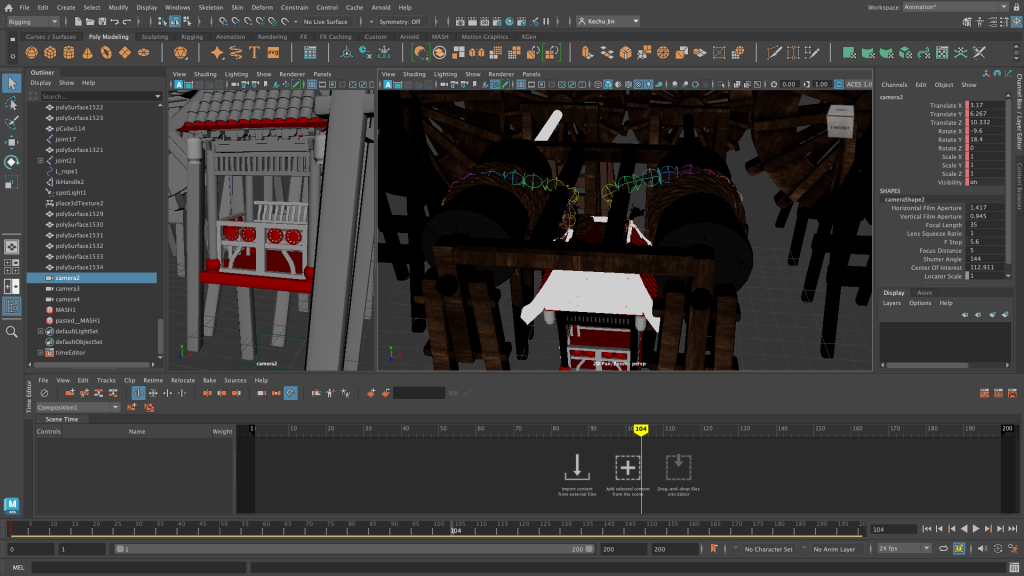
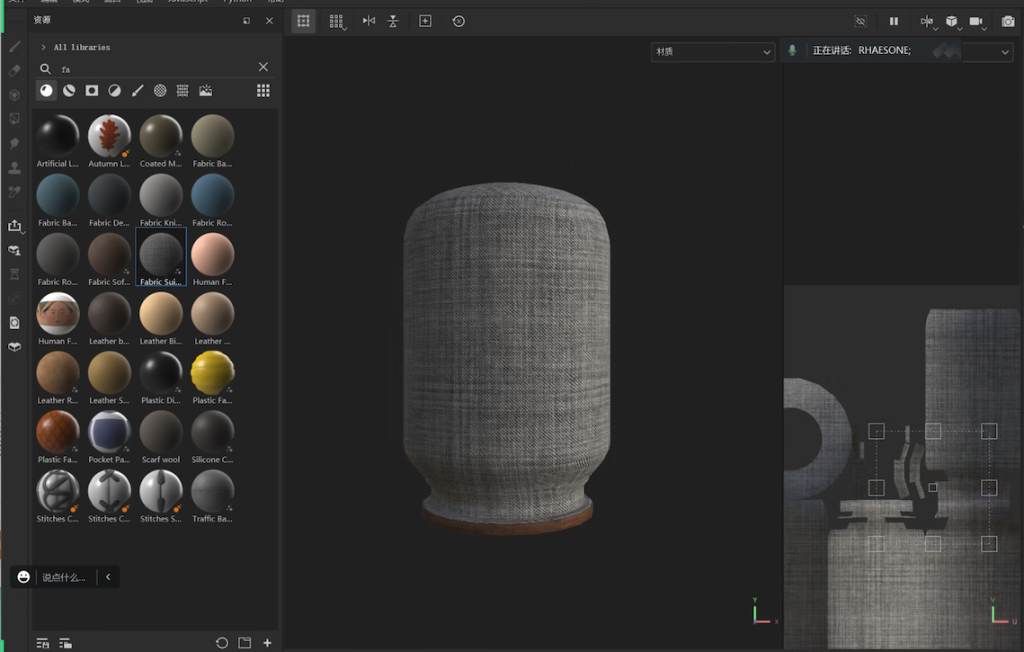
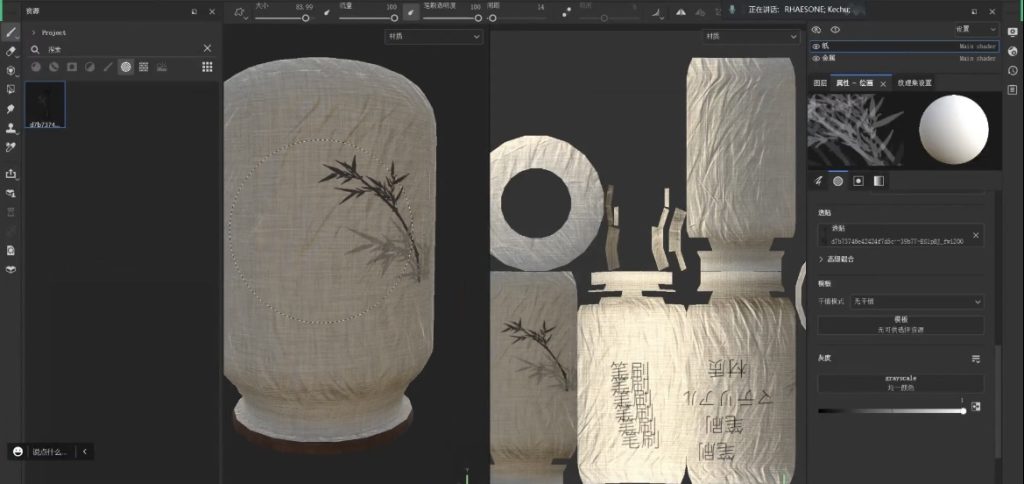
When working on the Retro device project, I encountered two major challenges. Firstly, refining the concept was a difficulty as I found it labor-intensive to rely solely on human power for operating an “elevator”. This led me to contemplate if there was a way to liberate human effort. Inspired by the advanced water engineering during the Tang Dynasty, where large-scale hydraulic facilities were built to assist in agricultural cultivation, I pondered whether hydraulic power could be utilized to drive the elevator’s ascent and descent. Consequently, I proposed the idea of using a water wheel rotation to drive the pulley system, achieving the purpose of elevator traction.
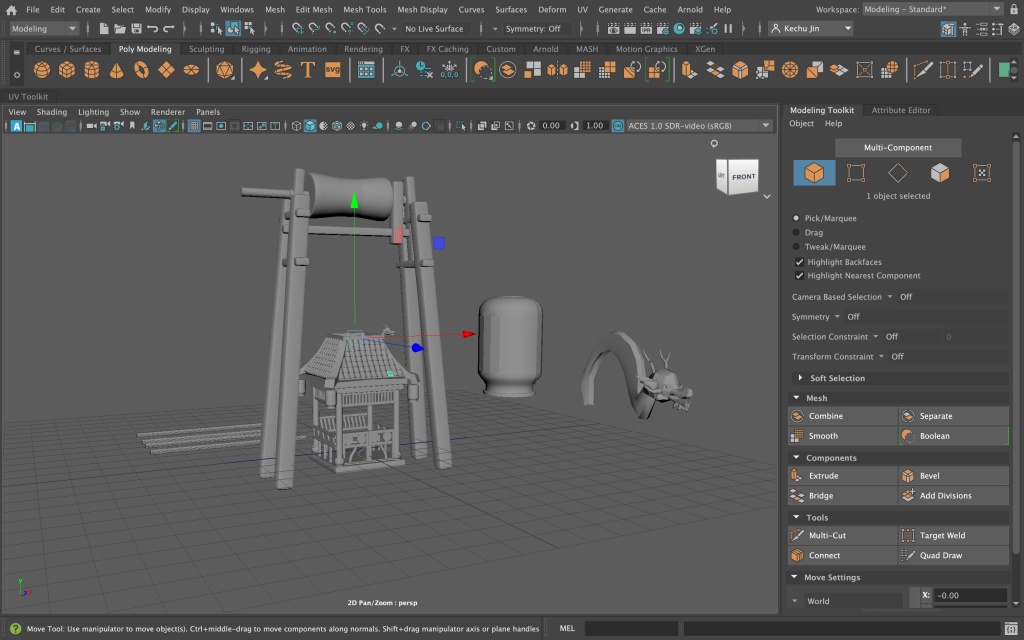
The second significant hurdle I encountered was animations for the rope and its intricate winding motion, which presented a considerable challenge for me. Prior to this, I didn’t have much exposure to skills of Maya rigging.With no prior experience in manipulating and skillfuly tying ropes, I sought guidance and advice from Kalista and Sonya. Additionally, I delved into loads of research, meticulously studying diverse resources and instructional videos, all aimed at mastering the art of rope manipulation.In the end, I successfully produced an animation depicting the rope being wound around a rotating pulley.
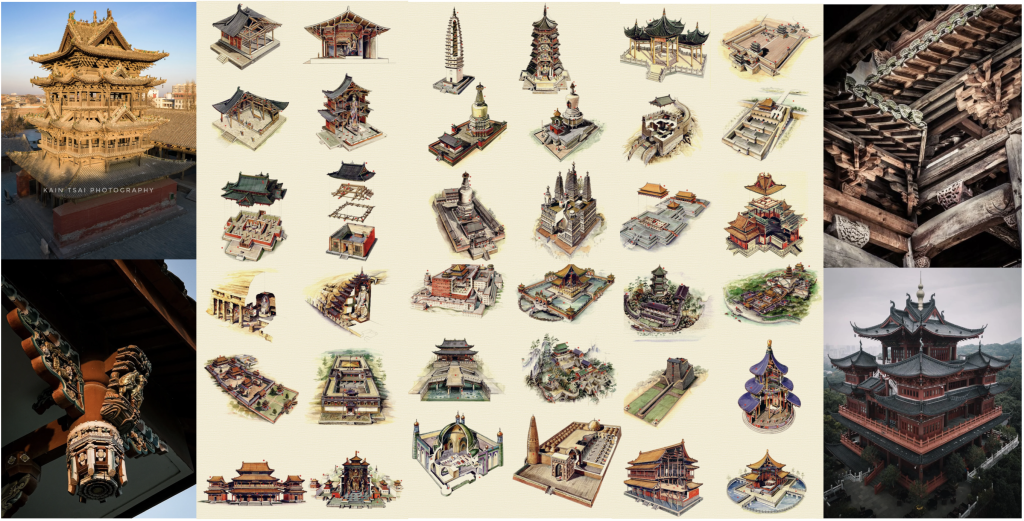
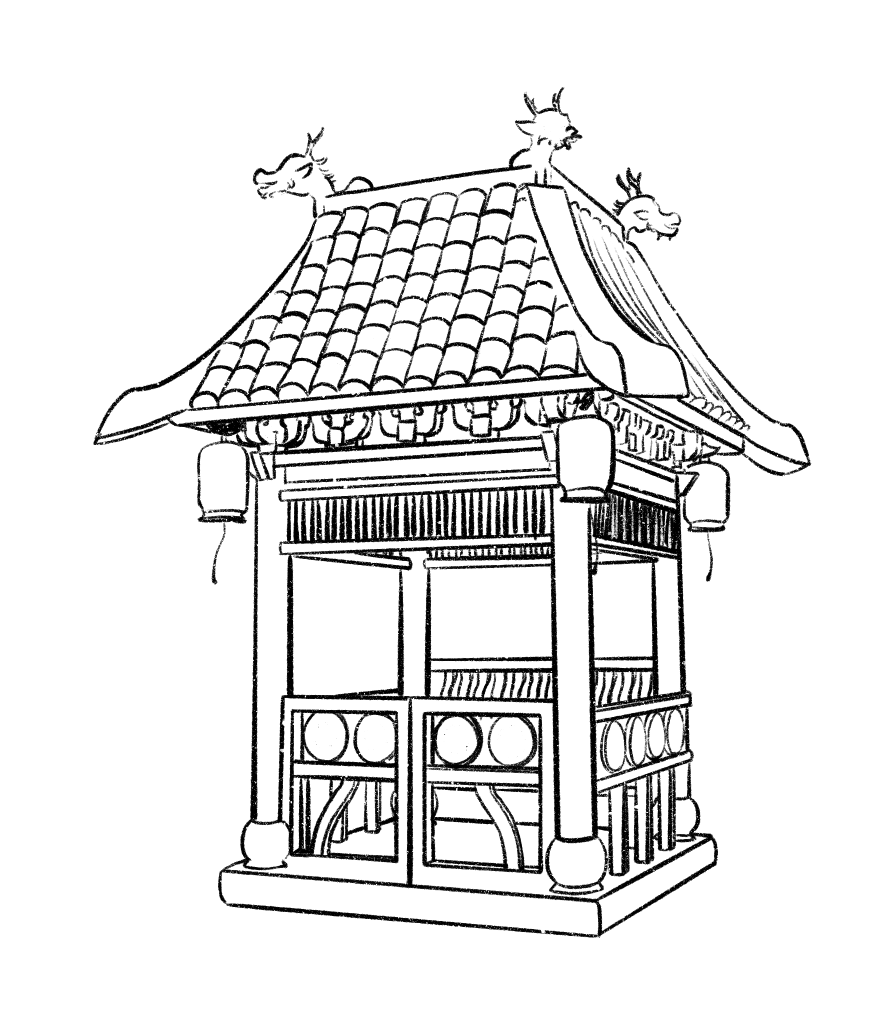
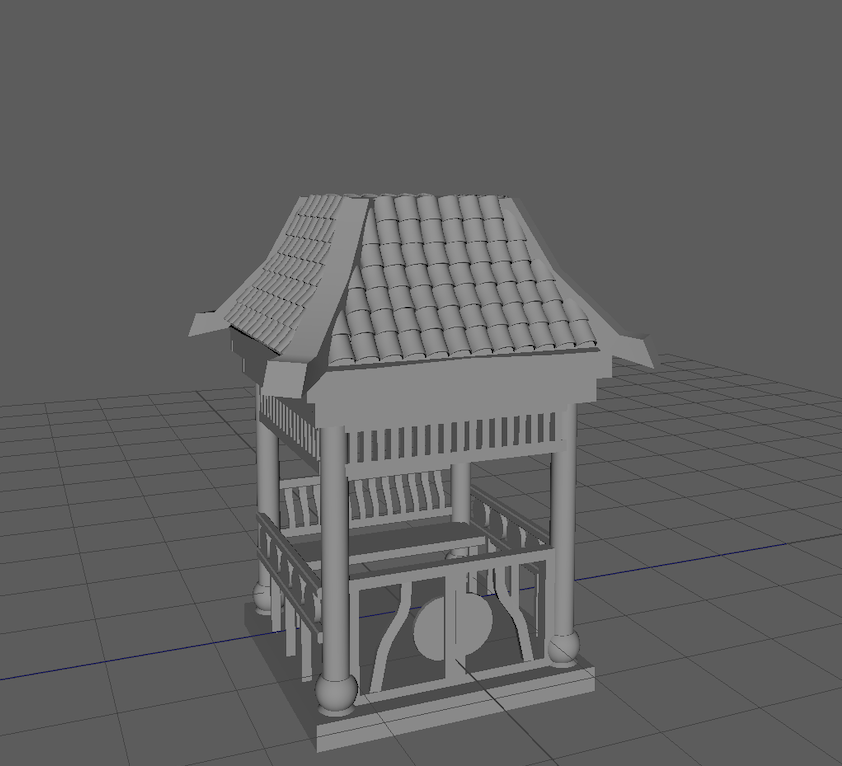
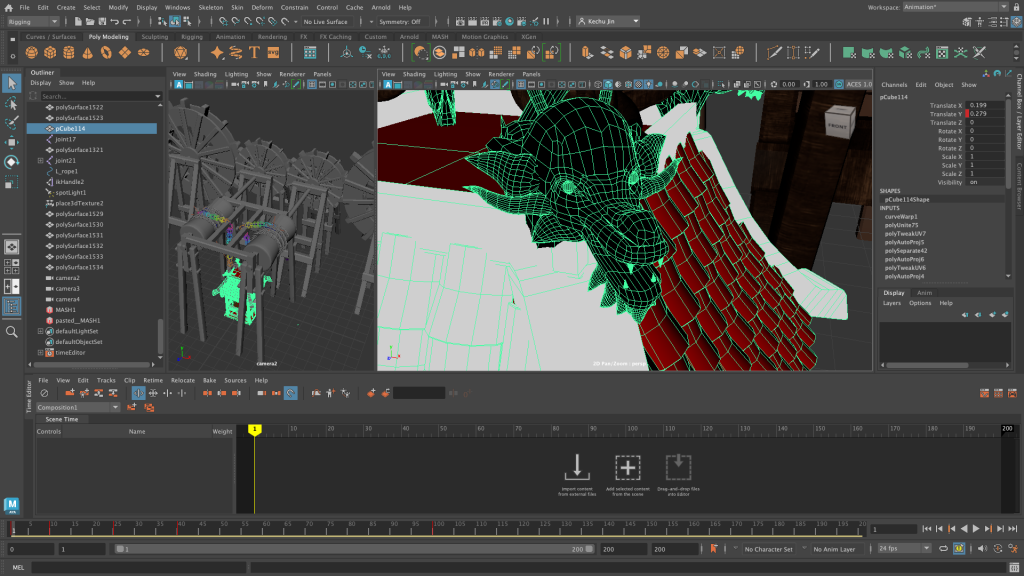
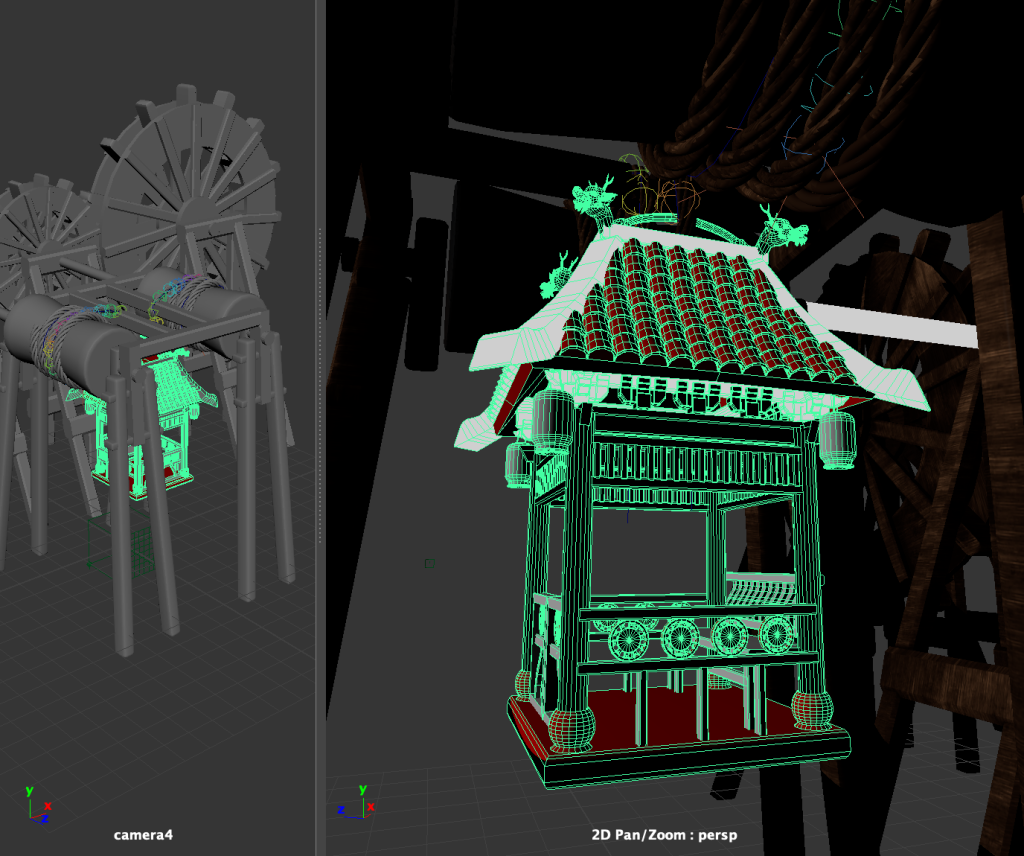
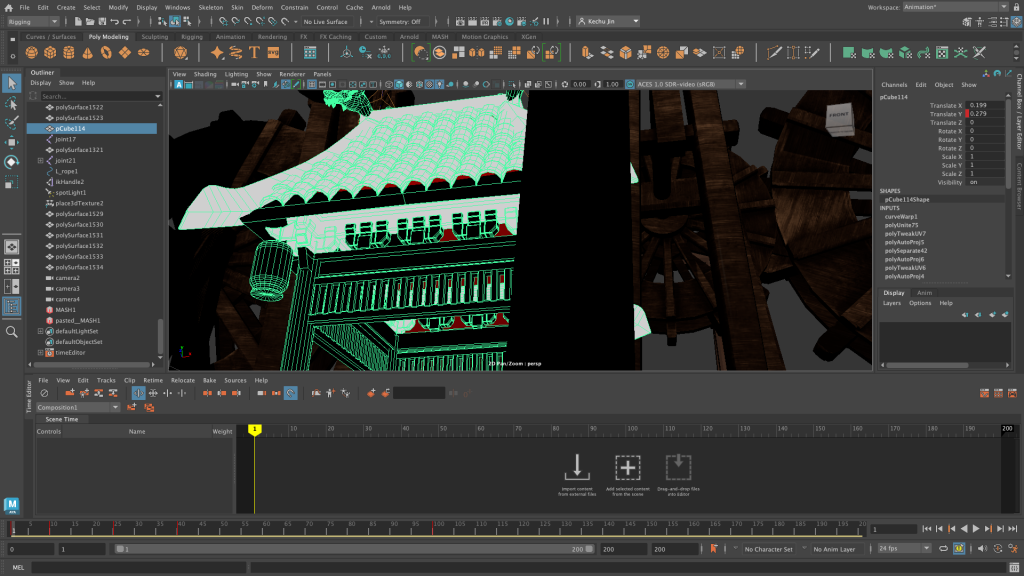
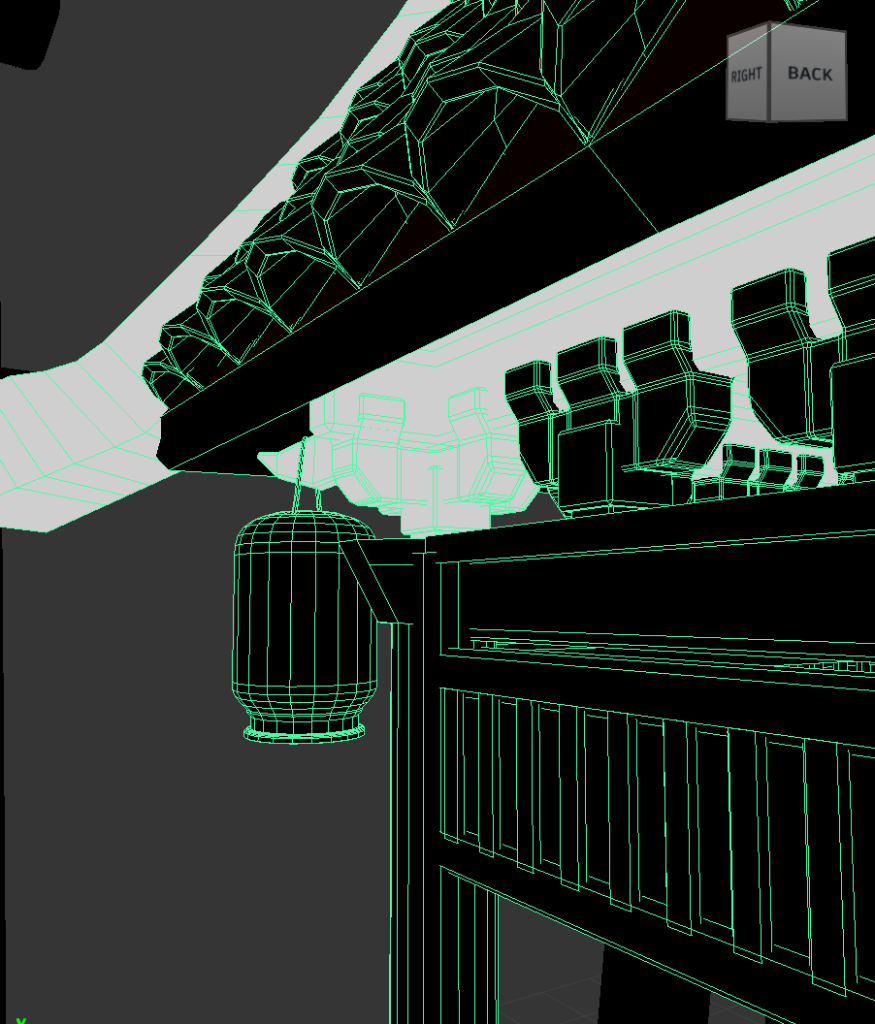
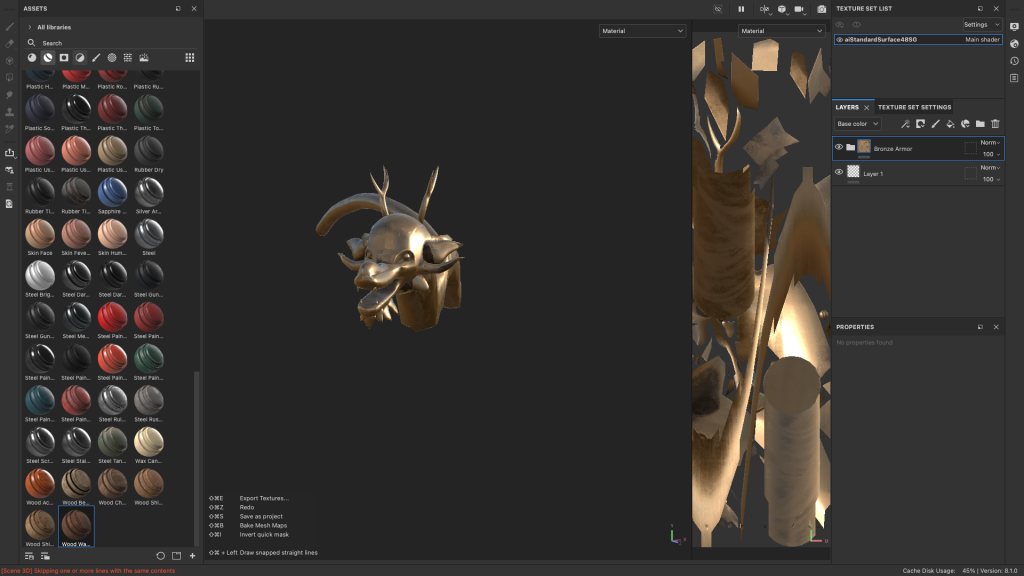
Additionally, I conducted research on ancient Chinese architecture, exploring the structure of bracket sets (dougong) and roof styles. Building upon the foundation of Chinese ancient architecture, I made modifications and designed the elevator carriage. Considering that the elevator was intended for imperial use, I decided to incorporate the dragon elements into the building. Therefore, I created a dragon model on the roof ridge, which also served as a connection point between the elevator and the rope.
In addition, I carefully considered the size of the waterwheel and the design of its rotation mechanism. Initially, I designed only two waterwheels, but if they were too large, they couldn’t connect directly to the mechanism responsible for the elevator’s ascent and descent. On the other hand, if I made the waterwheels smaller, they wouldn’t appear capable enough to drive the elevator. Therefore, in the end, I devised a design with four waterwheels. Two large waterwheels serve as the primary driving force, propelling the smaller waterwheels, which in turn operate the elevator’s movement. This design seems relatively more reasonable.
Another point that needs to be mentioned is I originally wanted to use ZBrush to do some simple sculpting on the beams, but I ran out of time. If I had more time, I will familiarize myself with and learn more skills related to ZBrush.
The Story Behind The Elevator:
This is a story from the Tang Dynasty about an emperor who built a hydraulic elevator to celebrate his mother, the Empress Dowager’s 60th birthday. The emperor had a deep passion for mechanical and military engineering. He conceived and constructed this magnificent elevator as a gift.
Gathering a team, he combined ancient hydraulic engineering with his own vision, meticulously designing and manufacturing the hydraulic elevator. The towering structure of the elevator reflected the emperor’s pursuit of excellence and symbolized his love and respect for his mother. In a solemn ceremony, the emperor showcased this engineering feat to the Empress Dowager. The smooth ascent and descent of the elevator symbolized the Empress Dowager’s social status and the emperor’s love and support for her. This hydraulic elevator became a precious legacy, representing the emperor’s dedication and the spirit of excellence.